Author name: Vidfin

Personal Finance

Average Directional Index (ADX)

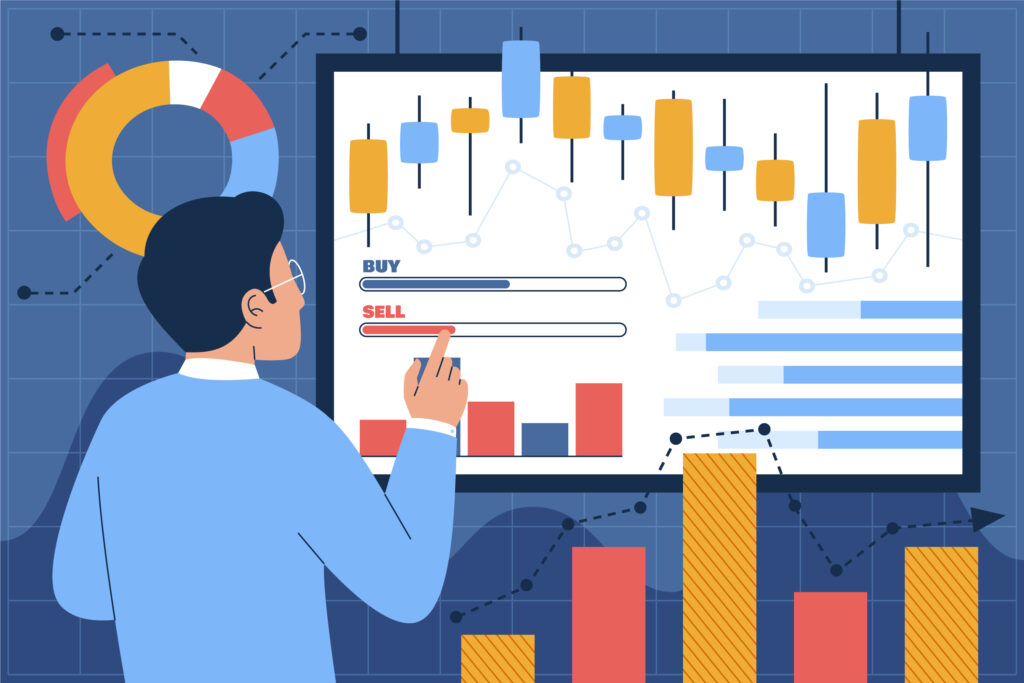
Introduction Trend chasing is an important trait for trading in the stock market. It helps one better analyze the market movements and devise a trading strategy to capitalize on gains. Knowledge of trend-chasing strategies can reduce the risk of the trader and increase their potential profits. Several different trading indicators are used by traders to access the market momentum. One such indicator is the average directional index.  In this blog, we will study the ADX indicator and understand how to use the ADX indicator to measure a trend strength. Let us first understand what the average directional index is. What is the ADX indicator? ADX indicator was first developed by an American engineer Welles Wilder to determine the price movements in the commodity industry, but due to its high relevancy, today this is an important indicator for technical trading of stocks and for analyzing stock trends. ADX is primarily used to study the strength of the trend. Let us now understand how ADX works. How average directional index works: ADX is an important trend indicator that is used to assess the strength of a stock market trend. ADX is derived from two indicators, the positive directional index (DI+) and the negative directional index (DI-). Therefore an ADX indicator will always have 3 lines:  The positive directional indicator (DI+) line The negative directional indicator (DI-) line The ADX line. The value of ADX lies in a range of 0-100 and is used to signify the strength of a trend irrespective of its direction. The strength of the trend generally refers to the level of influence that the buyers and sellers have over the market over a specific period of time. The readings that are closer to zero or greater than 60 are generally a rare occurrence.  Another important aspect of the ADX indicator is the DM which stands for Directional Movement. Let us now understand what these lines tell us What do ADX lines tell you? Let us now learn about some ADX indicator strategies that help the analysts study the ADX charts.  If the DI+ line is above the DI- line, it indicated the upward price trend with the ADX line measuring the strength of the uptrend. Similarly, if the DI+ line is below the DI- line it shows a downtrend in the prices. Here the ADX line is used to measure the strength of the downtrend. A strong trend is reflected, if the ADX line is above 25. However, if the ADX line is above 40, it shows a very strong trend. Similarly, if the ADX line is below 20, it means that no trend can be shown.  If the ADX line drops after reaching a high value, it indicated the end of a trend. If the ADX line starts going up it shows a strengthening trend. How to Calculate ADX To calculate ADX, you first need to find +DM, -DM, and the true range (TR). Typically TR is calculated for fourteen periods. +DM is calculated by reducing the value of the previous high from the current high. -DM  is calculated by reducing the value of the current low from the previous low. Then the True range(TR) is calculated by reducing the low price (of the day) from the High price. For example, Assume that for the stock of XYZ, there were the following figures on 1 March Day low = Rs. 160Day high = Rs. 200 Previous low = Rs. 166Previous high = Rs. 180 Day high – previous high = Rs. 200 – Rs. 180 = Rs. 20 Previous low – current low = Rs. 166 – Rs. 160 = Rs. 6  Since Rs. 20 > Rs. 6, DM is positive in the above case and vice versa. Now, to calculate the ADX, continue to calculate DX values for at least 14 periods.  After calculating DM, one can derive the value of DI Then the DX is calculated as = DI 14 difference/ DI 14 sum x 100  ADX = Simple average of DX (taken for 14 periods) ADX is undoubtedly an important tool to study stock trends but it comes with its own set of limitations. Let us now discuss some of the limitations of ADX: Limitations of ADX ADX is not always considered a good indicator for the less volatile stocks, and for the more volatile stocks, it may generate some false signals. Since ADX is based on moving averages, it reacts slowly to any changes in the price. Hence, It is a laid-back indicator. ADX is not a wholesome tool for analyzing stock trends and it must be used in conjunction with other indicators when trading. Conclusion: When investing in the market, the trend is your only friend. It is extremely important to analyze the trend and devise a suitable strategy. ADX is one of the most used technical indicators because it is simple to use and when combined with other indicators it can help one analyze the market trends with accuracy. ADX indicator can help one identify the strength of trends and make profits out of them. It allows one to detect favourable trading conditions and invest in profitable trends. ADX also helps one find the changes in trend momentum and allows them to manage their risks. One can get the highest returns by trading in the strongest trends. It also helps one identify the exit points from the markets and provides them with analytical insights. 

Personal Finance

How to read a CIBIL report?

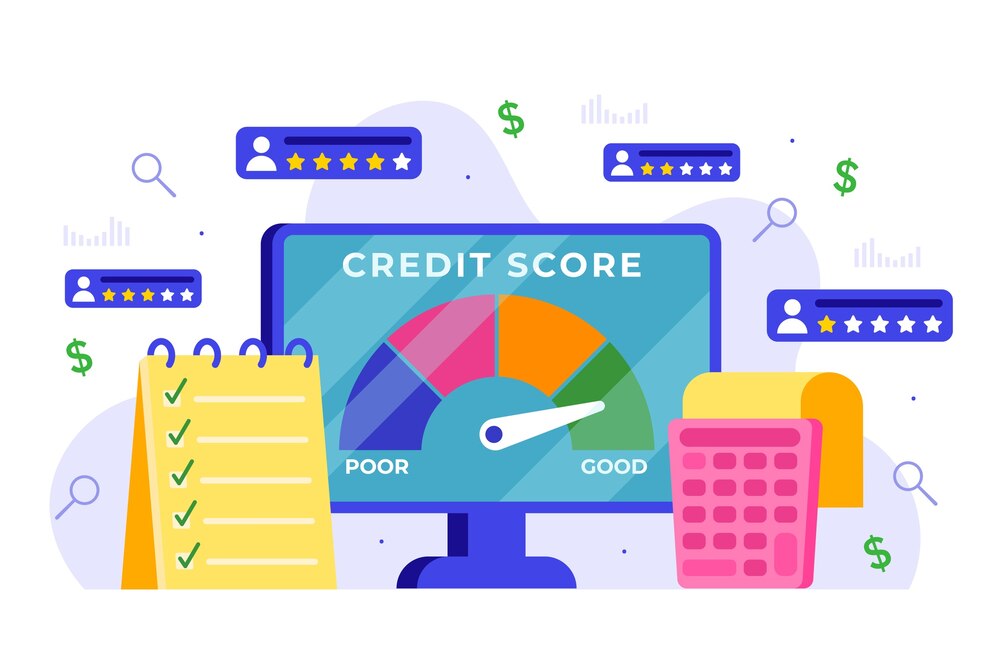
Established in 2000, CIBIL is an entity liable for maintaining credit information. The full form of CIBIL is the Credit Information Bureau (India) Limited.   Generally, such Credit Information Companies (CICs) are third-party, independent organizations that accumulate credit card and loan data.  And then, they share this data with associated financial institutions and banks. Individuals can obtain their CIBIL report with credit score, history, and more information.  However, for a layperson, decoding this report can become quite taxing. If you are also feeling the heat, find the easy way to read a CIBIL score report and familiarize yourself with your credit situation in this post. What is a CIBIL report? Once CIBIL has accumulated the financial data of individuals and companies, it creates a Credit Information Report (CIR), also known as a CIBIL report. This report comprises vital information that financial institutions can view if that concerned individual has applied for a credit card or a loan. This information discusses previous loans, such as home, car and personal loans. Along with that, it also has information regarding your overdraft facilities and credit cards.  One detailed section is dedicated to your repayment history and how quick you have been with your EMIs. Ultimately, this report helps the lender comprehend whether you can return the loan or repay the bills on your credit cards.  But how to get CIBIL report? You can go to the CIBIL website and click on the ‘know your score’ option. Fill out an online form with information like your name, date of birth, income, identity verification, address, phone number, and the loans you have taken out.  In addition to individual CIBIL reports, financial institutions also get CIBIL Commercial Report to make better lending decisions when they get loan requests from public limited corporations, private limited companies, partnership firms, and sole proprietorships.   What is the CIBIL score? Your CIBIL score is a three-digit numeric summary of your credit history calculated using information from your CIBIL report’s ‘Accounts’ and ‘Enquiries’ sections, which includes your loan accounts or credit cards, payment status, and outstanding amounts’ that are past the due date. The score indicates your credit worthiness, as determined by lenders, based on your borrowing and payback history. The CIBIL score ranges from 300 to 900, and the higher your score, the more likely you will be approved for a loan.  How is the CIBIL report calculated? Four significant factors influence your CIBIL score: Payment history: Your CIBIL score depends on your payment history of loan EMIs and credit card dues. If you pay your payments on time without missing a payment, it will positively impact your score. Credit mix: A well-balanced mix of secured and unsecured loans is likely beneficial.  Multiple loan queries: Having too many loan inquiries will lower your score because it shows that you might depend more on credit.  Credit utilization ratio: The credit utilization ratio is the proportion of the credit amount you have used out of the total available credit. A low credit utilization ratio has a positive impact on your credit score.  How to read a CIBIL report? In a CIBIL report, you will find 7 primary sections. While they have varying roles, each of these sections is equally vital. The objective of these sections is to offer genuine and complete information. Find out more about these sections in the following points:  CIBIL Score Your CIBIL score, based on ‘Accounts’ and ‘Enquiries’ in your CIR, ranges from 300 to 900.  Personal Information CIBIL collects personal information to help NBFCs and banks in verifying your data. This section contains: PAN card details Name Date of birth Voter’s ID Other identification proofs It collects this information through a variety of methods. If there is any data that has been collected from previous lenders, it will be marked with an ‘e’ to ensure accuracy.  Contact Information As the name suggests, this column contains all of your contact information. This is additional proof of genuineness. This section offers a variety of contact information and addresses, such as: Addresses (permanent, temporary, work, and home) Email IDs Contact numbers (home and mobile) This information is taken from previous and current lenders to ensure accuracy.   Employment Information In this section, you will find data related to the companies and your jobs. They check your records at the companies and how frequently you switched from one organization to the other.  This way, the lender gets to comprehend your income patterns. Anybody who frequently switches jobs has fewer chances of getting a loan disbursed because of consistent income changes and unstable earnings.  Account Information This is the most vital section of a credit report. Account Information connects the financial institutes and banks to your financial status. You will find records of your ongoing and previous credit card statements and loans here.  It also contains information regarding how frequently you make your repayments or if you have missed any payments. The account information also has your bank account details.  It also mentions your account type, be it savings or current, single or joint. With this data, they can comprehend your behavior and determine your creditworthiness.  Red Box Sometimes, you can see a red box above the ‘account details’ table. If any disputes are linked to the account information, the red box will come up with the text citing the fields under the question.  They will remove the box after the dispute is resolved. There could be or could not be any change in your information based on the lender’s input on the disagreement.  Inquiry Information This is one such section that has details of all the banks that are thinking of lending you credit cards or loans. Such inquiries are made by varying NBFCs and banks that have kept your credit score in mind.  Thus, to be a worthy candidate for getting a loan, make sure your credit score is good enough.  Conclusion A good credit score is a score that is above 700. If your score is lower than this benchmark, availing

Personal Finance

Fama And French Three Factor Model

Introduction The Fama and French model is the updated form or has evolved from the primary Capital Asset Pricing Model (CAPM). When dealing with shares and stocks, knowing about all these related models is pertinent, which will help you analyze the returns and market values. The risk factors involved in trading the stocks and associated returns of the portfolio are calculated using such formulas of the model.  As there are two types under the name Fama french model itself, we will look at how the Fama and French Three Factor Model works. This guide will shed light on the principle and the formula with relevant examples.  Formula and Explanation The formula for Fama French Model is simple, and anyone with proper knowledge about the stock exchange will be able to understand it quickly. It is written as:  Where,  ra is the rate of return  rf is the risk-free rate  ß is the factor of coefficient for sensitivity  (rm – rf) is the market risk premium  SMB is Small Minus Big  HML is High Minus Low  α is the investment’s alpha factor and;  e is the total risk.  This innovative formula for the Fama french 3-factor model makes predicting returns and risks easier. The Principles on Which this Model Works As this is a three-factor model, it works on three aspects or factors. They are: a) market risk  b) size risk  c) value risk.  To be precise, the detailed factor it runs on is the SMB and the HML. SMB is in line with the performance of small-cap companies over the large-cap companies. In comparison, HML is under the high book-market-value company versus the low book-to-market value company. The size risk pertains to the Small Minus Big (SMB) factor. The beta coefficient in the formula can be either positive or negative. This coefficient concerns the capitalization of the company. It is believed under this model that small-cap companies can expect high rates of return when compared with large-cap companies. Therefore, the beta factor is vital for determining the risks.  The value risk is under the High Minus Low (HML) factor. The companies with a high book-to-market ratio will yield higher returns than the low book-to-market value companies. The book-to-market value is the difference between the predicted value in the book and the actual market value of the company.  If the coefficient factor is positive in the case of SMB, the returns are directed more towards a small-cap company. Similarly, if the coefficient is positive for the HML factor, the returns are more related to the high book-to-market value company.  There are two main aspects, namely the “value” and “growth.” In both cases, the returns pertain to value. If the condition is vice versa to the one cited above, the returns will be under the terms of growth and not value.  Why is this model considered the best? The Fama and French Model is the advancement of the CAPM, a traditional model. This model knows and calculates the risk factors precisely. The risk-free rate is known to be applied when there are no possible risks while receiving the returns. The market risk premium is the estimated returns where the market with risks and risk-free markets are compared. All such important factors are used in applying the Fama and French models.  The fama french 5-factor model is more advanced as it includes two more factors: profitability and investment. These two factors are used in addition to the factors of the three-factor model.  As CAPM used only a single factor to assess the market risks, this model serves the best. Determining the beta coefficient factor with just a single element is challenging. Further, the volatility of the investment alone is estimated using the CAPM, and the risk-free rates determined might fluctuate from time to time. All such drawbacks can be overcome using the Fama and French Models.  Who can find this model to be useful? Investors who are new to the field might not be able to find the model helpful as compared to experienced investors. As they might take time to understand all the terms and principles of trading, they can prefer simple methods to know the risks of returns after investment.  A professional investor can use this Fama and French model to know the intricate details of the returns. A mediocre investor can get help from an advanced analyst for investing in stocks. The analyst might then use the model to calculate the risks of the stock portfolio.  This model came into existence in 1992 and was developed by Eugene Fama and Kenneth French. The model’s name comes from their names, and there is no specific fama full form as such. Eventually, after the three-factor model, the five-factor model also developed.  Conclusion Summing it up, a wise investor will gain lucrative profits without much loss by using this model. It is preferred to use Fama and French models and the related formula to know all the stock returns and market risks involved. Moreover, the working of the model must be thoroughly understood, and the relevant values should be appropriately applied. Therefore, one must invest only after knowing and accepting the risks involved in stock returns.  References https://corporatefinanceinstitute.com/resources/knowledge/finance/fama-french-three-factor-model/ https://www.thebalance.com/what-is-the-fama-french-3-factor-model-5223585 https://smartasset.com/investing/fama-french-3-factor-model https://www.fincash.com/l/basics/fama-and-french-three-factor-model https://www.investopedia.com/terms/f/famaandfrenchthreefactormodel.asp Three Factor Model of Fama and French

Personal Finance

What are Bills of Exchange?

While payments are an integral part of a business, you’d know that ensuring payment inflow isn’t effortless if you’ve ever chased an invoice. Thus, a bill of exchange is curated to keep everybody liable for making timely payments.  The Negotiable Instruments Act 1881 regulates the provisions for bills of exchange. As per Section 5 of this specific act, it’s an instrument in writing that contains total order signed by the maker, directing a particular individual to pay an amount sum of money to the instrument’s bearer. When such an order is acknowledged in writing, it becomes a legal bill of exchange. In this post, let’s find out everything about the bills of exchange.  What is Bills of Exchange in India? If we have to define the bill of exchange, it is a formally written IOU that cites when a specific amount of money must be paid. This is a bill that a person draws to direct another person to pay the money to somebody else. If accepted, somebody has to pay the amount; it becomes real.  Generally, the seller provides a credit period to the buyer upon selling products or services. For example, suppose A orders B to pay Rs.10,000 for 100 days after the date, and B accepts the order by signing the bill. Then, it will become a bill of exchange.  However, there are certain situations when the seller may not be in the position to provide a credit period to the buyer. And then, the buyer may not be in a position to pay instantly.  In such a scenario, the seller would ask the purchaser to give a written promise to pay the sum of money on a specific date. This written promise becomes a valuable credit instrument when properly made and stamped.  Often, banks accept these written instruments, and you can withdraw money against them. Moreover, you can also endorse the instrument, meaning you can pass it to somebody else.  Parties to a Bill of Exchange A bill of exchange has three different parties, such as: Drawer A drawer is the creator of the bill of exchange They have to sign the bill A creditor who is permitted to get payments from the debtor can draw the bill Drawee Drawee is somebody upon whom the bill is drawn He is the debtor who should pay the drawer A drawee is also called an Acceptor Payee The payee is somebody to whom the payment should be made The payee could be either the drawer himself or the third party Example of Bills of Exchange Let’s take up an example here to understand bills of exchange in a better way. Suppose Mr Sharma has drawn a bill on Mr Bansal for three months for Rs.1,00,000. The bill is payable to Mr Gupta on 17th June 2022.  Mr Sharma ordered Mr Bansal to pay Rs.1,00,000 to Mr Gupta. If Mr Bansal accepts the order, he will write a bill as follows: Accepted Mr Bansal Delhi 17th June 2022 When the drawee pens down this type of acceptance on the bill, it turns into a bill of exchange. In the example above, Mr Sharma is the bill’s drawer, Mr Bansal is the acceptor, and Mr Gupta is the payee. In the end, Mr Bansal will pay the money to Mr Gupta. Features of Bills of Exchange Here are the features of bills of exchange: It comes with the date by which the money should be paid. The amount is payable to the person whose name is mentioned on the bill or to their bearer. A bill of exchange should have a revenue stamp. The bill payment should be in the legal currency of the nation. Format of a bill of exchange Here is a format of a bill of exchange   Stamp                                                                          Name and address Amount                                                                          Date              One month after the date pay to (name and address of payee) or order, the sum of (mention the amount) for value Accepted     Drawer (Signed)     (Signed) Drawee’s name     Drawer’s Address Drawee’s Address Types of Bills of Exchange Jotted down below are the types of bills of exchange for your reference: Documentary Bill: Here, the bills of exchange are supported by related documents that validate the authenticity of the transaction or sale between the buyer and the seller. Supply Bill: This is a bill that a contractor or a supplier withdraws from the government. Demand Bill: This bill is due when it is demanded, as the name implies. There is no set payment date on the demand bill. Thus, it should be cleared whenever put forth. Trade Bill: This type of bill is relevant only to trade. Usance Bill: This one is a time-bound bill. It means the payment must be made within the given time. Accommodation Bill: An accommodation bill is the one that is sponsored, drawn and accepted without conditions. Inland Bill: It is payable only in one nation. In this bill, both the acceptor and the drawer live in the same country.  Foreign Bill: Opposite the inland bill, this one can be paid outside the country. For instance, import bills and export bills. Clean Bill: This bill doesn’t have any documented proof. Thus, the interest is higher as compared to other bills.   Discounting Bills of Exchange A payee could sell a bill of exchange to a different party for a discounted price to acquire funds before the payment date that is put on the bill. The discount signifies the interest cost that is related to being paid early.  Difference

Personal Finance

What is CIBIL Score? How to improve CIBIL Score?

What is CIBIL Score? Is it a number? Is it your score on a test? Or from a game you played as a kid? Well, it’s not really any of these. You see, CIBIL stands for Credit Information Bureau India Limited and is used by Indian financial institutions to compute your credit score. This score is generally referred to as the CIBIL Score. The numbers range from 300 to 900, and the higher you are, the better it is. What is a credit score? This is a three-digit number that goes from 300 to 900. It determines your credit risk or creditworthiness, i.e., how likely you are to pay your EMIs and credit card dues on time.  Credit bureaus such as TransUnion CIBIL, Equifax, and Experian publish credit reports and credit score that helps financial institutions to help assess the creditworthiness of the loan or credit card applicant.   There is nothing to worry about if you don’t know how to check your credit score/CIBIL score. You can go to the official CIBIL website to check your credit score.  Payment history, the debt amount, and the credit history timeline can be found in your credit report, impacting your credit scores.  What is CIBIL Score? Your CIBIL score is the primary thing any lender will look at to evaluate your loan application. A good credit score means that you have responsibly handled credit. A CIBIL score ranging from 700 to 900 is considered a good credit score.  This makes future lenders confident that you will be able to pay back the dues on time.  Here’s how the CIBIL Credit score is segregated:   <600 Low 600-649 Difficult 650-699 Possible 700-749 Good 750-900 Excellent As per the CIBIL website, there is a 90% chance that individuals with a CIBIL of above 750 will be granted loans.  Importance of good credit score  We have seen that a CIBIL score above 700 is considered to be a good CIBIL score. But what is the importance of a good credit score? Let us find out in this section.  Better chance of getting a loan  It is important to understand that other variables play a role when applying for a new credit card or loan. Lenders also analyze vital variables such as the income, existing debt of an applicant.  So, having a good CIBIL score isn’t the only parameter. However, having an excellent CIBIL score can make you more confident while applying for a loan or credit card.  Get the best interest rates  Individuals with high CIBIL scores can qualify for the best interest rates. It is because lenders see the individual as a financially responsible person who can pay the dues on time. So, the low interest rates help people with good CIBIL scores save money on their loans.  Ability to bargain  Having a good credit score means that you will pay less for a credit card or a new loan. If you need extra negotiating leverage, you can use other appealing offers based on the credit score that you’ve gotten from other financial institutions. Creditors are unlikely to compromise on the loan interest rate if you have a poor credit score as you may not have any alternative credit offers or possibilities. Get approval for higher limits  Your borrowing power is based on how much money you make and how good your credit score is. Banks are more probable to let you borrow more money because you have shown that you pay your debts on time. Having a good credit score is one of the benefits of having a good credit score. How to improve CIBIL Score? We have seen the importance of a good CIBIL score. Having a good CIBIL score is an important element of adult life. But what if your CIBIL score is low? Let us know how you can improve your credit score.  Check CIBIL Score: Checking your CIBIL Score and Report should be the first thing on your to-do list. It is because checking your CIBIL report can help you to understand the reason behind your poor to average CIBIL score.  Your CIBIL score may have taken a toll due to a wrong entry, or someone might be misusing your personal details. You can figure out the problem areas after carrying out a detailed analysis of the credit report.  Not applying for multiple loan products You may be tempted to apply for a loan at a different bank or NBFC if a financial institution rejects your loan request. But, hold your horses.     When you apply for personal loans, credit cards, home loans, or any other type of debt, financial institutions do a hard pull to review your credit record to make a subsequent loan decision.  Multiple hard inquiries have a basic problem in that they cause lenders to build a bad image of your credit behavior. Too many hard inquiries in a short period of time portray you as a credit-hungry consumer with a high-risk quotient. When presented with high-risk profiles, most lenders would either reject the application or give a ridiculously high rate of interest, which is simply not what you are looking for.  Pay loans on time  If everything looks fine, late payment of loans or credit card dues can impact your credit score. So, if you are prone to postponing payments to the last moment, opting for auto-payment of credit card bills and loan EMIs can be a better option. Moreover, many credit card holders fall for the minimum required payment. It is nothing but deferring your payments to a later date, which means that you cannot pay your dues on time, which might impact your credit score. Payment history makes up 30%, the highest percentage, of the credit score. So, you need to focus on timely payment if you want to increase your credit score. Set up alerts, automatic payment, and pay your credit card dues completely to improve your CIBIL score.   Mix of debt  Another critical factor that affects your credit score is the mix of debt.

Personal Finance

Bookkeeping – Definition, Types and Importance of Bookkeeping

You’ve probably heard the word “bookkeeping” used multiple times in relation to business and finance. To give you a gist, bookkeeping is essential for every business, regardless of the company’s transactions, industry, nature and size.  Whenever you are commencing a business, maintaining proper records is essential. So, to help you understand the concept of bookkeeping, this post covers everything about it.  What is Bookkeeping? Bookkeeping is a comprehensive process of recording a company’s financial transactions into organized accounts every day. It can also include diverse recording methodologies and techniques used by businesses.  Bookkeeping is an integral part of the accounting process for various reasons. You can generate correct financial reports that measure business performance by keeping the transaction records up to date.  Moreover, when you have kept detailed records through bookkeeping, it will be helpful during tax audits.  Importance of Bookkeeping In most circumstances, those intending to come up with a business generally overlook the need for bookkeeping for various reasons, including expenses. And then, several small companies don’t hire full-time accountants to work either.  Instead, they typically hire a bookkeeper or outsource this task to a professional bookkeeping firm. Correct bookkeeping offers companies a reliable measure of their performance.  Not just that, it also offers information to come up with general strategic decisions. It acts as a benchmark for the income and revenue objectives. All in all, once you have an up and running business, investing extra money and time to maintain records properly is essential.  Records the Transactions’Transactions’ SourceBookkeeping is a source of all a firm’s transactions as it records everything from payment notes, invoices, receipts, and more. It helps track records, sales, purchases, receipts, and payments of every transaction made by and from the business.  The financial statements or other business reports are summarised from the books of accounts. Hence, every business needs to have it in place.  Assists in Decision Making A proper and correct bookkeeping process offers firms a precise measure of performance. It also provides information for making fundamental strategic decisions and a foundation for its revenue and income goals.  Bookkeeping is a dependable source for firms to evaluate their financial performance. One of the primary reasons for bookkeeping is maintaining all the business’s financial records that display the financial position of each account or head of expenditure and income.  Provides Information to Create Financial Statements Bookkeeping completely summarises the income, expenditures and other ledger records frequently. Since bookkeeping keeps a record of and tracks all transactions, it turns the commencing point of accounting. In case the bookkeeping of a firm isn’t proper, the company’s accounting will not be exact.  Bookkeeping offers information to come up with financial reports that mention certain information about the business on how much profits have been generated at a specific time.  Types of Bookkeeping There are two different types of bookkeeping systems. A business entity is free to select any of these types. However, some companies also use a combination of both types, to each their own.  Single-Entry Bookkeeping The single-entry system is a foundational system that helps either generate daily or weekly reports or record daily cash flow receipts. Under this system, a bookkeeper must record one entry for every financial activity or transaction.  Such a single-entry bookkeeping system comprises recording just one side of the activity or transaction. When it comes to maintenance, it handles the following data: Sales Payments Cash receipts Purchases Primarily, the single-entry system of bookkeeping is used by small businesses that are involved in minimal transactions daily.  Double-Entry System of Bookkeeping The double-entry bookkeeping system mainly records a double entry for every financial transaction or activity. This system offers checks and balances as it records the conforming credit entry for each debit entry. This is not a cash-based system; transactions get entered when debt is incurred, or revenue is earned. Moreover, this bookkeeping method is based upon the duality concept, meaning every financial transaction impacts two accounts.  Hence, every debit entry to an account has a matching credit entry in another account and vice versa. This system is adopted universally and regarded as appropriate for recording financial or business transactions. Difference Between Bookkeeping and Accounting The bookkeeping and accounting careers are somewhat similar. Often, both of them have to work side by side. Also, both of them need a variety of same attributes and skills. But there are several differences between bookkeeping and accounting regarding work and objectives.  Here are some points highlighting the difference between both: Bookkeepers generally record the daily financial transactions of a company. By contrast, accountants concentrate more on the bigger picture.  Bookkeepers have to stay involved in a lot of details and should give their keen attention to everything. Meanwhile, accountants use the inputs of bookkeepers to analyze and review financial information and create financial statements frequently. They also conduct audits and foresee future business requirements.  Bookkeepers should be good with numbers and have significant attentiveness toward details. One should be able to shift their focus quickly and catch hidden, tiny mistakes in invoices or budgets. As an accountant, one must have sharp, logical skills and should possess problem-solving capabilities.  While the job of a bookkeeper is to ensure small pieces are fitting into place properly, an accountant has to use those pieces to come up with broader and significant conclusions. Wrapping Up By now, it is clear that every business should be on the ball as far as bookkeeping is concerned. In such a scenario, the size of the company doesn’t matter. At the end of the day, the way you keep your bookkeeping records plays an integral part. So, if you are thinking of handling the daily accounts of a company, make sure you are abreast with everything related to this concept. 

Personal Finance

Fundamental Analysis for Traders

Brief on Fundamental Analysis Traders and investors need to make every move consciously and carefully. If you are a trader, you must follow specific methods to analyze and decide how to take the next step in trading. You can follow this principle either by fundamental analysis or technical analysis.  While there are many controversies against the first method, it has helped thousands of traders succeed. Here you should study various elements affecting the trade, analyze the expected result, and apply that to your trading. All the aspects like economic, social, political, and several other factors must also be thoroughly researched and analyzed in the process of fundamental analysis. In this article, let us examine the need for fundamental analysis, methods, and application.  Why should the fundamental analysis be followed? Any newbie trader will take time to understand the basics of trading to gain a lucrative sum. Though you may find it difficult initially, you can learn how to trade with the help of financial models and methods like fundamental analysis.  The fundamental analysis of stocks will help you know the companies’ current status and market value. More precisely, it tells about the factors that might affect the price of stocks.  You can also analyze the future value of the stocks and understand the financial health of a company and all their cash flow in recent times with the help of this method.  You can easily understand the market’s intrinsic value, which helps in rightly moving the stocks. Moreover, this method is relied upon for carrying out even forex trading. That is why fundamental analysis is key to successful trading, and many professional traders and analysts use this technique.  How to carry out fundamental analysis First, you should know in detail about the instrument that has to be traded. Updating yourself with the current market value, the competing companies, and the factors impacting quantity and quality are all crucial steps. There are various strategies for approaching the stock fundamental analysis, such as top-down analysis, bottom-up analysis, balancing trading rate and interest rate, knowledge of demand and supply, and so on. Let us see in detail about the different approaches. Bottom-up Analysis: This method is opposite to top-down analysis. You should concentrate on the minute factors of the company that influences the trade. The revenues and basic structure on which the company functions is crucial in this approach. Apart from that, you can also analyze the microeconomic aspects like individual stock instruments.  Top-down Analysis: The top-down method works by analyzing macroeconomic factors. Such elements are social factors like the growth of the overall economy relating to trade.  For instance, the employment status of the whole society will impact the trade and you must analyze this function. This approach, therefore, impacts the market on a large scale.  EIC Analysis: EIC known as the Economic, Industry, and Company analysis is a traditional method in trading. You must first analyze the large economy level and the related events affecting the fluctuations in trading. Second is to know which industry is on the upper hand in trading. You will come to know about the flourishing industry and can predict the future value of that industry market. Lastly, the company in which you invest the stocks must be studied. The transactions and the cash flow are the factors under this category.  Make sure to concentrate on the company’s strengths and weaknesses first and then invest accordingly. The company’s debt, cash inflow, revenue, expenditure, and many more factors will directly influence the stocks you invest in. Accordingly, you can calculate the rate of return.  Moreover, knowing about the competitor of the company and their economic status will help predict the stocks’ future. For example, by analyzing and investing in an established company with vast capitalization, you will know that there are equal risks and profit potential. There is much more to be studied regarding fundamental analysis like an expert. Application of fundamental analysis in day trading As day trading involves buying and selling stocks the same day before the market closes, the fundamental analysis of the stock market comes into play. When you’re engaged in day trading, the company’s financials must be analyzed first. You must follow the primary economic data of the company daily from different sources.  Moreover, you must plan well ahead of doing day trading. Know about the company’s previous week’s economic calendar, which might help predict the market value of the upcoming week. Accordingly, the stocks can be bought and sold through day trading.  But mostly, technical analysis is practiced in day trading as fundamental analysis works for a long-term trade. Even after this, you can easily analyze the fluctuation and volatility of the stock value using fundamental analysis. When you continuously practice this method, you will get a hold of it, thus further increasing the success rate in trading. Apart from that, the history of fluctuating value of the stocks will help in applying technical analysis where the graphs are almost the same.  Difference between the technical analysis and fundamental analysis When you get into trading, you can practice technical analysis or fundamental analysis for speculation about the stock exchange.  Technical analysis differs from fundamental analysis as it tells you when to make the next move, while the latter deals with knowing how to trade.  The technical analysis world is based on past events and accordingly predicts when the stocks will be priced high.  While understanding what fundamental analysis is and analyzing the fluctuations of the company takes a long time, technical analysis works in a much shorter period.  You needn’t put much effort into conducting the technical analysis as it can be applied to trading by just reading the market value charts. However, fundamental analysis takes time and effort to make a proper investing decision.  Therefore, you might use technical analysis if you need a quick profit. However, for long terms gains, fundamental analysis is something that you should look upon. Conclusion To sum up, only experienced traders practicing fundamental analysis

Personal Finance

IPO Grey Market Premium (GMP), Kostak Rate, and Subject to Sauda

Any company that wants to go public will propose its shares for the public to buy. The rate at which the company offers its shares is called an Initial Public Offering (IPO).  When investors think of investing or purchasing shares in an IPO, they look for the ones that give a good return. Grey Market Premium is an unofficial way to know which IPO might provide a good return.  Let’s dive into IPO Grey Market Premium, Kostak rate, and Subject to Sauda rate. What is IPO GMP? When a company comes up with an IPO, the calculated information based on the company’s demand is called Grey Market Premium (IPO GMP). IPO investors use GMP to comprehend the estimated price an IPO might list when it is announced.  IPO grey market starts in an unregulated market once the IPO date and price bands are publicized. GMP is affected by various factors like the existing market conditions, share subscription numbers, and demand.  Investors mostly look for this premium to gain a fixed return from the stock they purchase.  Grey Market premium increases when the demand for the IPO is high. This, in turn, increases the return of the investors. For example, if XYZ Company is going to issue its IPO in the next 20 days, at Rs 200 per share.  Some investors would not want to wait for these 20 days as they’d wish for the shares as soon as possible. This makes them buy and sell the shares prior to the issuance of the IPO. As a result of this, the Grey Market evolved for the IPO.  What’s the Kostak Rate? The amount an investor pays for an IPO application before the IPO listing to the seller is known as the Kostak rate. Kostak rates react to the demand for an IPO just like the Grey market. An investor can buy or sell their full IPO application on Kostak rates outside the market to fix profits. When the Kostak rate is applied to the IPO applications, even if the investor has not received the IPO allotment, the buyer must pay the Kostak rates for the IPO.  Theoretical examples like Kostak rates and public issue gives the likelihood of allocation. It also allows earning good profits. What’s Subject to Sauda Rate? When an investor purchases a share for the firm in the IPO listing, the amount decided in their application is called subject to the sauda rate. In simple terms, the rate at which an investor gets his IPO allotment for his application is Subject to Sauda rate.  If the investor doesn’t get an allotment, the sauda is canceled.  Like Kostak rates, investors cannot fix profits at the sauda rate. Subject to sauda is like a deal. The deal is valid if the investor gets an allotment during the listing. Say, for example, two investors have agreed on a deal to buy or sell shares after the listing at Kostak rates.  If the allotments are given, the buyer is liable to pay the extra amount over the Sauda rate to the seller.  If the buyer does not get any allotment, he is not liable to pay any extra amount. It is also said that the Subject to Sauda rate is directly associated with the Grey market during the IPO listing.  For example, a company called ABC is coming up with an IPO at Rs 100 per share. IPO Shares are expected to list in 20 days. A seller can sell their Retail IPO allocation of Rs 2 lakhs at Rs 5000 on ‘Subject to Sauda.’ If the seller obtains an allotment, they will get Rs 5000. If the seller doesn’t acquire an allotment, they won’t get anything. How to Calculate IPO GMP? Let’s say the IPO of a company is fixed at ₹ 200. If its IPO Grey Market Premium is operating at ₹ 65, then that company will be listed at ₹ 265. This is done so that the investors get up to IPO GMP 65% of the profit on the day of listing.  If the investor trades his shares on a listing day, he earns a profit, and if he keeps it for a long time, it confirms to be beneficial in the long run. Latest IPO GMP rates IPO NAME IPO GMP IPO PRICE LISTING GAIN RAINBOW Medicare IPO ₹10 ₹516-₹542 ₹400 Adani Wilmar IPO ₹24 ₹218-₹230 ₹500 Past GMP rates (Closed 2021) IPO NAME PRICE BAND LISTING GAIN Data Patterns ₹320-₹330 ₹4000 Medplus Health IPO GMP ₹150-₹160 ₹2500 Metro Brands Metro Brands ₹0 MapMyIndia IPO GMP ₹690-₹700 ₹900 Shriram Properties IPO GMP Discount ₹0 Past GMP rates (Closed 2021) The grey market transactions are unofficial. No authorities are part of this. It relies on the trust between both parties. Subscribe only by viewing the Fundamentals of the companies. Trading or investing in Grey Market Premium is risky, and you must take some safeguards. The IPO grey market premium of any company is specified by its Demand. Buying and Selling in the Grey Market As the grey market is unofficial, the parties involved need to trust each other while making deals. No authorities are involved in this market, and the lawsuit would be difficult to make if something goes wrong.  Investors make their risks while trading in this market. The fluctuations in this market are high, which again may seem like a risk factor for investors.  IPO GMP is mostly for gaining profits that come with huge risks. Grey Market – Legal or Illegal? The Grey market may not be termed an illegal market. But as no officials or businesses are involved here, and all transactions happen between brokers, buyers, and sellers, the market has huge risks.  Trading in primary markets after the IPO listing is one of the safest options.  It is not about whether the market is legal or illegal as it doesn’t come under government or anyone’s possession. Rather, it can be said that this market is mainly for generating profits, which comes with its

Personal Finance

Operating Leverage: Formula, Example and calculation

What is Operating Leverage? Operating leverage is a concept in business finance that describes an organization’s ability to take advantage of its fixed costs and make them productive. Basically, fixed costs are the ones a business incurs when it conducts its operations. Fixed costs are expenses that don’t change with output levels, such as rent and salaries. In contrast, variable costs are incurred according to the amount of output produced, such as the cost of raw materials or utilities used in production. Operating leverage is a concept used to evaluate how efficiently a company uses its assets to generate revenue and profit. So, when incremental sales go up, the fixed costs will remain the same. In this case, the company’s profit might double or triple with the same fixed costs.  The break-even point of a business is determined using operating leverage, which also aids in determining the right selling prices to cover all expenditures and make a profit. Regardless of whether they sell any units of product, businesses with significant operational leverage must cover a bigger amount of fixed costs each month. Airlines is one such sector that comes with a high fixed cost, such as the cost of the aircraft, hangers, and insurance. As a result, their operating leverage is also high. While the company may increase their profits with the fixed costs, these companies are susceptible to recession and are heavily impacted when the economy is on a downward trend.  Low-operating-leverage businesses may have high variable costs directly related to sales but also have fewer monthly fixed expenses. Service-based companies are companies that have a higher variable cost and come with lower operating leverage. These companies have the flexibility to increase or decrease their variable costs per the economic scenarios.  How to Calculate Operating Leverage Operating leverage is calculated by dividing operating income by the percentage change in sales. Operating income is the profit after paying for the direct operating costs, including fixed and variable costs.  Here’s the formula for operating income:  Net Income – Operating costs.  One can easily find the operating income from the company’s income statement  Change in the operating leverage is expressed as a ratio and called the degree of operating leverage(DOL). The higher the operating leverage, the more earnings will change for every small percentage change in revenue. So, the formula of operating leverage is %Change in Operating Income/ % change in contribution/ sales  Let us see this with the help of an example. We are considering two companies: Indigo, an airline-based company and TCS, an IT company.  We have included the required data from the companies’ income statements. To calculate the DOL, we divided the change in operating income by the change in revenue/sales.  As you can see, there is a range of possibilities for operating leverage. Positive leverage shows that the business is outpacing its costs with sales. Negative leverage, on the other hand, shows that the business is not making enough money to pay the various costs.  High and Low Operating Leverage Due to the fact that certain industries have higher fixed costs than others, it is crucial to evaluate operating leverage between businesses in the same sector. The idea of a high or low ratio is then explained in greater detail. In general, higher operating leverage is better than low leverage since it helps companies to generate more profits from every sale. But with smaller sales volumes, companies with minimal operating leverage may have a better chance of making a profit. Additionally, businesses with a high level of operating leverage may be more vulnerable to changes in revenue. In a strong economy, businesses might make more money. However, due to their high fixed costs, an economic downturn could result in a decline in profits.  High Operating Leverage Excessive operating leverage typically results in a significant portion of a company’s expenses being fixed costs. In this instance, every additional sale generates a profit for the company. It must, however, generate enough revenue to cover the high fixed costs. If the corporation achieves this, it will imply that the entity in charge of its business operations will be able to generate lots of revenue after paying for all of its fixed costs. In these situations, the earnings are more sensitive to changes in the volume of sales. Low Operating Leverage  This indicates lower fixed expenses and higher variable costs. In this scenario, a business must generate a minimum amount of sales to cover its fixed costs. When it reaches the point where all of its fixed costs are met, it becomes profitable. It can gain incremental profit in terms of Selling Price minus the Variable Cost once it has reached the break-even point, where all of its fixed expenses are covered. However, this profit won’t be significant because the variable costs are so high. We may fairly assume that the break-even units a company needs to sell to experience a no loss and no profit equation will be significantly smaller when operating leverage is low and fixed expenses are lower. Difference between the degree of operating leverage and degree of combined leverage Financial leverage is when a company uses debt in its capital structure and has to pay interest on that debt.  A degree of combined leverage (DCL) is a leverage ratio that shows how the degree of operating leverage (DOL) and the degree of financial leverage(DFL) affect earnings per share (EPS) when sales change in a certain way. Combined Leverage Formula = %Change in EPS/% Change in sales = DOL*DFL

Scroll to Top